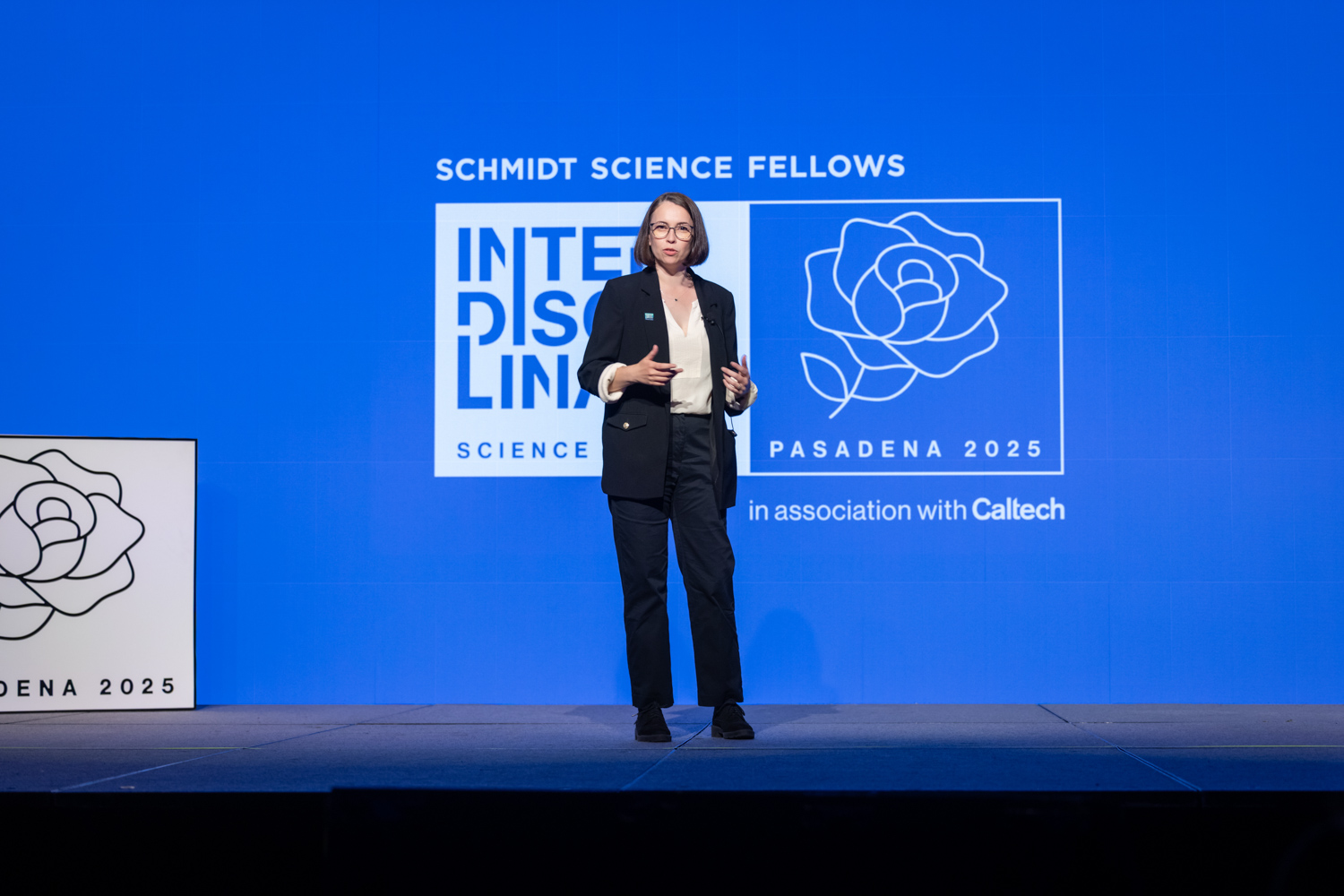
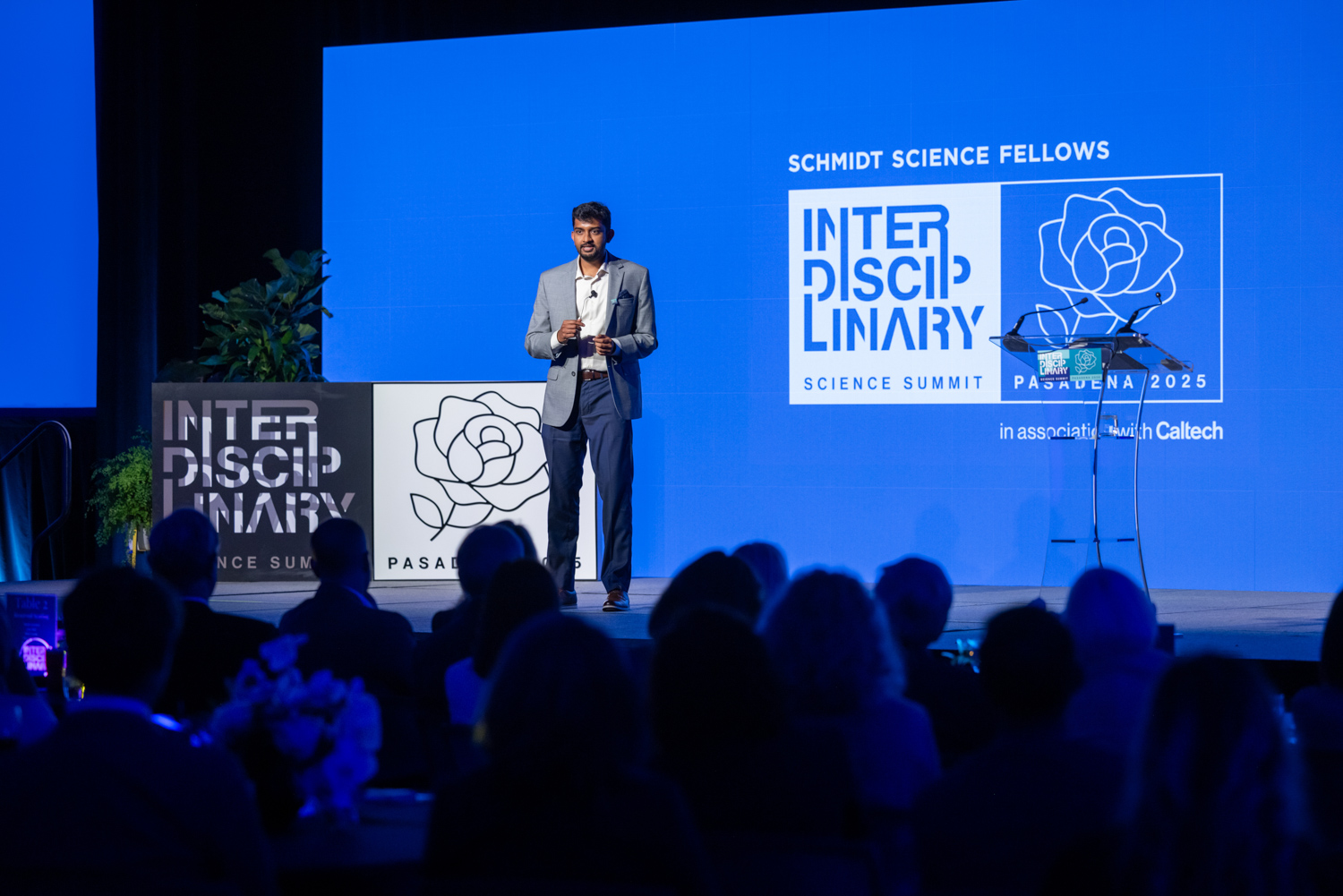
“If we’re going to solve the climate crisis, we need some sort of revolution.”
For 2023 Schmidt Science Fellow Neil Dalvie, that revolution could start with something surprisingly simple: bacteria and rocks. Neil is harnessing one of Earth’s oldest natural processes to tackle one of our biggest challenges.
Explore Neil’s interdisciplinary journey in our latest We Are Schmidt Science Fellows film.
Rock weathering naturally removes carbon dioxide from the atmosphere, but it happens over thousands of years. Neil is exploring whether biology can accelerate it.
At Harvard Medical School, he develops bacteria that help dissolve rocks faster. By speeding up this natural weathering process, his research could increase ocean alkalinity, allowing the ocean to absorb and store more CO₂ from the atmosphere.
As a Schmidt Science Fellow, Neil pivoted from vaccine and antibody manufacturing into biogeochemistry, bringing his process-engineering mindset to an entirely new field. A month spent in Alaska, surrounded by bigger and older structures than he had ever seen before, reinforced his belief that solutions to climate change need to work at massive scales.
Neil recently led a study published in Nature Biotechnology showing how a genetically engineered marine bacterium can accelerate rock weathering. The bacteria produce higher amounts of siderophores, molecules that help extract iron from silicate minerals. Using customized bioreactors with a continuous flow of seawater, Neil and his colleagues accelerated the weathering of olivine, a silicate mineral, boosting its potential to remove CO₂ from the atmosphere.
Neil has also received a five-year Career Award at the Scientific Interface from the Burroughs Wellcome Fund to advance his work using microbes for more sustainable mineral processing. He was one of 12 early-career researchers selected for the award, which supports scientists working across traditional disciplinary boundaries.
The ambition is enormous, but the principle is rooted in nature. As Neil puts it: “Bioweathering works, and it won’t change the Earth. It’s natural, and it’s already happening.”
If this process can be accelerated safely and at scale, the potential could be limitless.