Inspired by Disney, trained in Switzerland, and now embarking on his postdoctoral research in the heart of London, 2026 Schmidt Science Fellow Paul Wrede’s interdisciplinary journey will explore a future of precise, adaptive, and intelligent medicines.
As he begins this new chapter, he joins the rest of his 2026 Cohort in Oxford for the first convening of their Science Leadership Program.
Supported by Schmidt Science Fellows, Paul Wrede has moved from ETH Zurich to Imperial College London and pivoted from a PhD in biomedical engineering and microrobotics to work in synthetic biology.
He envisions a future in which high-precision medicines actively work with the body in the healing process.
His focus is on creating “intelligent medicines” from artificial cells that can navigate the body, respond to disease signals, and deliver treatments exactly where they are needed.
“The state of the art would be to inject a medicine that can adapt to the body so you only need a very small dose,” he says.
It is his interdisciplinary approach that is enabling this ambitious goal.

During his PhD in biomedical engineering, Paul designed remote-controlled drug-carrying particles, “microrobots”, that could be moved around the body by harnessing sound waves.
“I focused acoustic fields into a certain point inside a blood vessel and co-designed a drug carrier particle that could be trapped within this acoustic field,” he explains.
“We could then actively maneuver it around inside the body, almost like a remote-controlled car that you might have had as a kid, actively steering it through the vascular system.
“The idea was to overcome the limitations and inefficiencies of systemic drug injection, in which the drug spreads all over the body and causes side effects.”
Paul’s research (preprint article) has shown exciting potential in preclinical studies by guiding drug-carrying particles directly to blood clots.
This could prove particularly effective in treating ischemic stroke, a condition where a blood clot blocks a vessel supplying blood to the brain, depriving brain tissue of oxygen, often causing irreversible damage.
Treatment requires rapid use of clot-dissolving drugs, but sluggish blood flow in the blocked vessel can make it difficult to get those drugs to the clot.
“We dissolved the clots locally, in a much shorter amount of time, and at a much lower dose than the current clinical standard, potentially saving millions of brain cells,” says Paul.
And his ambition as a Schmidt Science Fellow extends much further.
“My idea is that these intelligent medicines will help us to better understand a disease at the same time as treating it, so we can adapt the treatment to make it more effective.”
At Imperial College London, he plans to develop “intelligent medicines” from artificial cells, which can be guided to disease sites, sense their surroundings, and deliver therapies in a controlled way that works with the body’s own healing responses.
This would offer a safer, more precise way to treat diseases.
“Cells can adapt to their environment. They can communicate with each other. They can even transform into other cells. So I began thinking, can we engineer and design new types of cells?” Paul explains.
He will build these artificial cells from the bottom up with special functions: the ability to produce drugs, to interface or communicate with the body, or interrogate the root causes of diseases.
“My idea is that these intelligent medicines will help us to better understand a disease at the same time as treating it, so we can adapt the treatment to make it more effective.
“As the disease responds, we can learn from it again and further adapt the treatment, creating an intelligent feedback loop that becomes more effective over time,” he says.
Rewind a couple of decades, and the inspiration for Paul’s scientific career is an unlikely one: Disney’s DuckTales.
It was watching the German version of the cartoon on TV as a small child that first sparked his fascination with scientific discovery.
“I thought the coolest character was Daniel Düsentrieb [Gyro Gearloose], who was always inventing things. It was only later that I figured out that he was a scientist and engineer,” says Paul, with a grin.
An unlikely source of inspiration, maybe, but certainly effective.
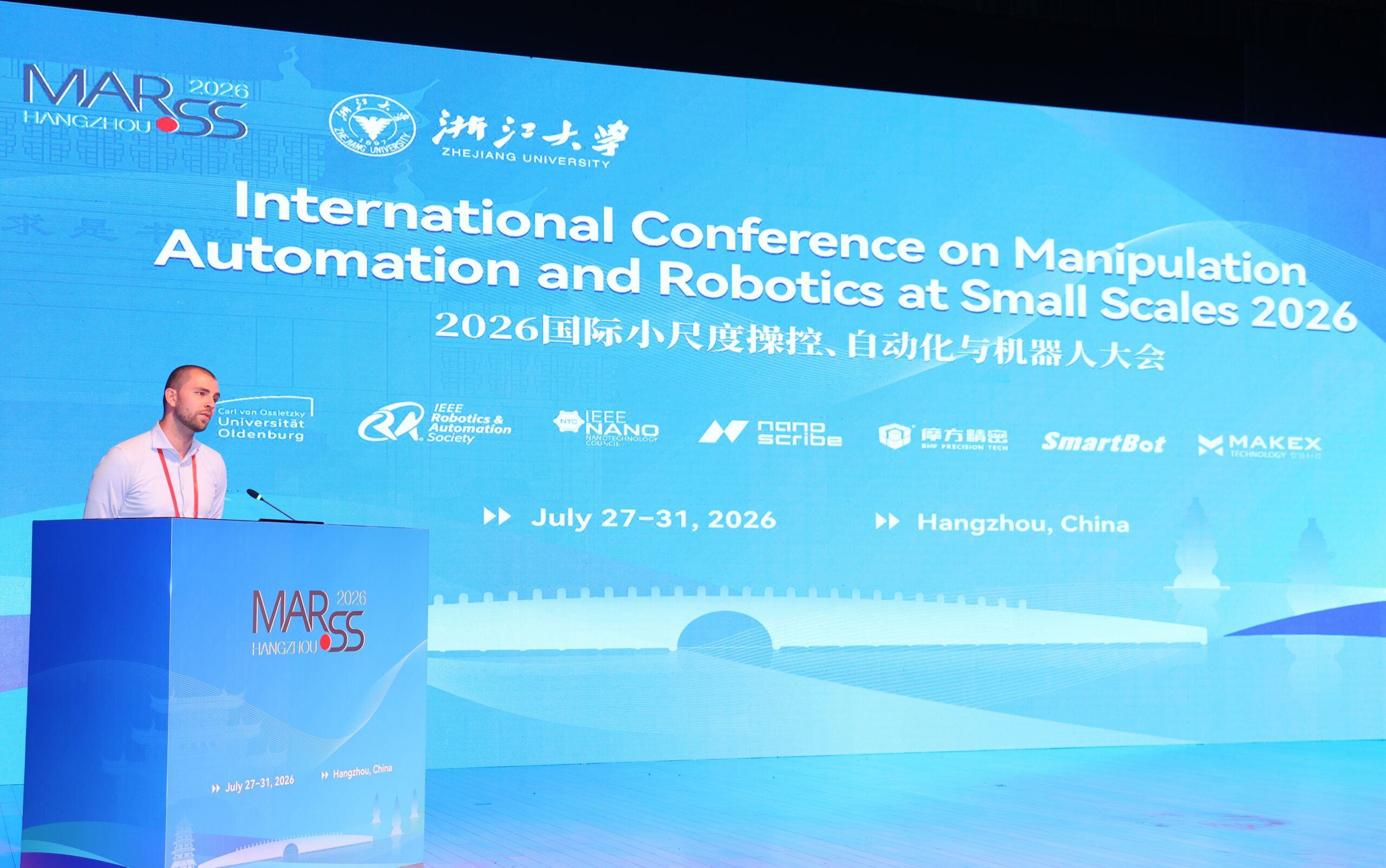
This summer, Paul organized two special sessions at the MARSS 2026 conference in Hangzhou, China, to exchange ideas with other researchers and explore how to move microrobots closer to real-world medical use.
He recently moved to London and is looking forward to exploring the city’s culture outside of the lab.
Top of his list is seeing some Premier League football (most likely Arsenal, because his new colleagues are supporters).
Paul is also looking forward to his first Science Leadership Program convening in Oxford.
Our Science Leadership Program is how Fellows build the skills, experience, and networks required to become interdisciplinary science leaders.
It offers a tailored professional development curriculum that includes three residential convenings and virtual sessions.
“It will be inspiring and interesting to meet other people who have big visions,” Paul says.
“I’m looking forward to really thinking big and talking with people about their ambitious ideas that might seem impossible.
Nobody knows if they’re going to work, but if they do, the impact could be extraordinary.”
Paul ultimately hopes to lead his own laboratory and nurture the research leaders of the future.
“Already during my young career, I’ve realized that good leadership is really key,” he says.
“It changes the whole structure of the lab and how you can pursue your science. So getting the skills and proper training is very important to me.”
“I hope to form well-educated, independent researchers who question the state of the art, pursue their own bold ideas, and have a positive impact on other people.
“This is my overarching goal in the end, to make the world a tiny bit better.”
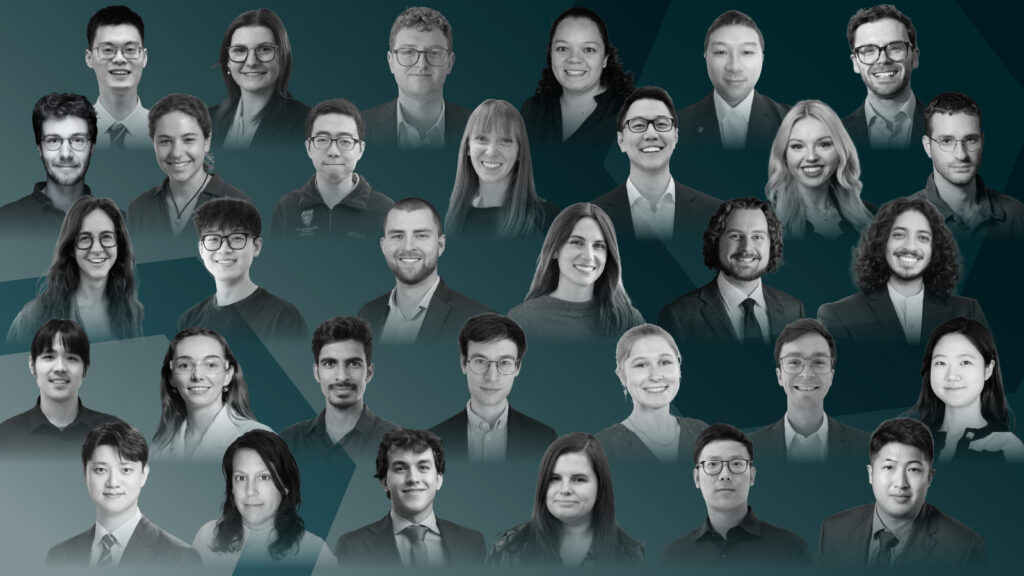
Photo under title: Paul Wrede at the MARSS 2026 conference in Hangzhou, China. Photo credit: MARSS 2026


